Imagine four calls hitting a business line on the same afternoon. None of these are real customer stories, but anyone who has worked a front desk will recognize every one of them.
Call 1: The furious billing caller. A customer rings a service company for the second time about a charge he believes is wrong. Before the assistant finishes its greeting, he's already talking over it: "I've been charged twice and nobody has called me back!" A weak system says, "Please calm down," and asks him to hold. A well-configured one says something like, "That makes sense, I'm sorry about the double charge. I'm going to bring in a team member who can look at your account right now," then transfers him with a summary of what he said, so he doesn't repeat himself.
Call 2: The confused caller. An older woman calls a clinic unsure whether her appointment is Tuesday or Thursday. She isn't sure which doctor she's seeing, and she apologizes three times for "not knowing how this works." The assistant slows down, asks one simple question at a time, confirms what it heard, and offers to have someone call her back if she'd like a person to walk through it.
Call 3: "Get me a real person." A caller doesn't want to explain anything to a machine. The right response isn't "let me just try to help you first." It's an immediate, no-argument transfer.
Call 4: The caller who switches languages mid-sentence. A customer starts in English, gets stuck on a word, and slides into Spanish. The assistant follows along instead of asking her to start over.
Four calls, four kinds of stress. In each, the outcome depended less on how smart the AI sounded and more on three things: whether it stayed calm and respectful, whether it knew its limits, and whether a human was easy to reach. That's the honest answer to the title question, and the rest of this post explains how it works.
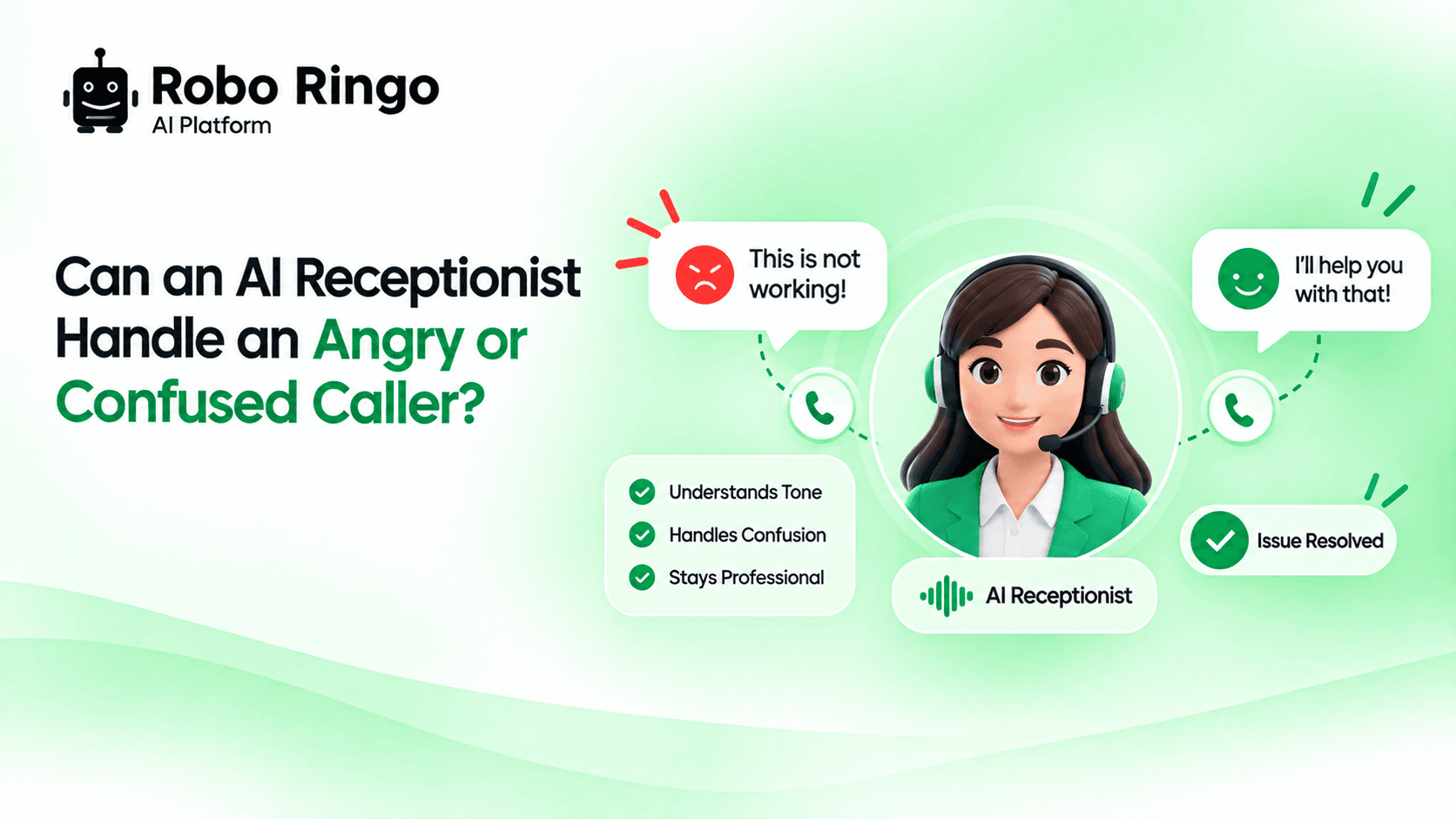
Short answer: yes, an AI receptionist can handle many angry or confused callers well, but it should never be the only option. The best systems acknowledge the caller's frustration, simplify for confused callers, and hand off to a person quickly, with context, when a situation exceeds what the AI can reliably resolve.
Key Takeaways
- Emotional calls are where an AI receptionist is tested hardest. Routine calls are easy; frustration and confusion expose weak configuration fast.
- Handoff triggers fall into three types: explicit (the caller asks for a human), sentiment-based (the caller is getting more upset), and capability-based (the request is outside the AI's scope).
- An explicit request for a person should be honored immediately and unconditionally. Trying to "save" the call first tends to make things worse.
- A warm handoff matters as much as the handoff itself. Callers shouldn't have to repeat their story to the next person.
- Confusion is a different problem from anger. It calls for slower pacing, simpler questions, and confirmation, not de-escalation scripts.
- Some things still belong to humans: exceptions, refunds beyond policy, legal threats, and distressed or vulnerable callers.
How an AI Receptionist Handles an Angry Caller
Anger on a phone call is usually less about the receptionist and more about a problem the caller has already tried to solve at least once. That context shapes what works.
Acknowledge first, briefly. Well-designed flows start with a short acknowledgment ("That makes sense" or "I can see why that's frustrating") and then move to action. One brief apology tends to land better than repeated ones, which start to sound performative.
Avoid the phrases that make anger worse. Lines like "Please calm down," "Per our policy...", "There's nothing I can do," and "Your call is important to us" reliably inflame an upset caller. Better patterns are "Let me get someone who can help with that" and "Here's what I can do right now."
Know when to stop trying. Most guidance from contact-center practitioners converges on the same rules: escalate when the caller asks for a person, when anger persists past two or three exchanges, when the issue needs authority the AI doesn't have, or when the caller mentions complaints, lawsuits, or public reviews. Trying to talk a caller out of escalation is the fastest way to lose them.
Hand off with context. In a warm handoff, the person taking over sees the transcript and a summary, so the caller isn't asked to start again. That single detail often decides whether a tense call cools down or blows up.
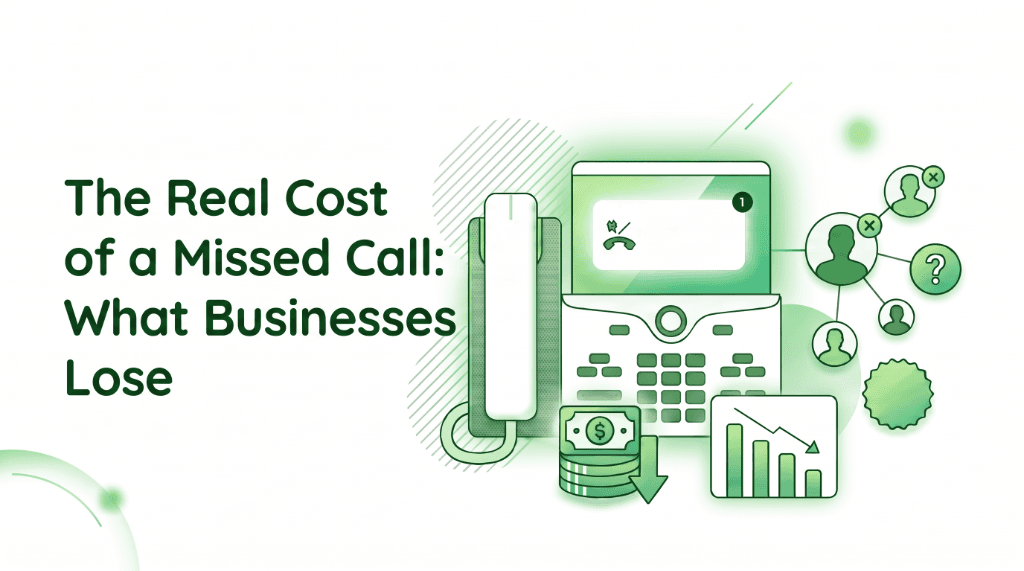
Why this matters commercially: one vendor's compilation of industry figures claims that about 67% of customers hang up in frustration when they can't reach a live person, and that half will switch to a competitor after a single bad experience. Treat those as directional rather than precise, but the pattern is consistent with what most operators see. A missed or mishandled call has a real price.
How an AI Receptionist Handles a Confused Caller
Confusion isn't hostility, and treating it like a complaint makes it worse. Confused callers need the opposite of an escalation script:
- One question at a time. Long, multi-part questions overwhelm people who are already unsure.
- Plain language and a slower pace. Avoid jargon and internal terms like "intake" or "provider network."
- Confirm before acting. "Just to check, you'd like to move your appointment to Thursday at 2, is that right?" prevents small misunderstandings from becoming missed visits.
- Offer a human early. For callers who are lost or anxious, "Would you prefer I have someone call you back?" is often the kindest option.
- Handle language switches gracefully. RoboRingo supports 50+ languages across voice and text, which helps when a caller is more comfortable in a different language than the one they started in.
The Three Handoff Triggers Every Business Should Configure
| Trigger | What it looks like | What should happen |
|---|---|---|
| Explicit | "I want a real person." "Transfer me." "Let me speak to a manager." | Immediate transfer, no attempts to talk the caller out of it |
| Sentiment-based | Rising volume, repeated complaints, escalating language | Acknowledge, then transfer before the caller has to demand it |
| Capability-based | Refund exceptions, legal threats, medical urgency, anything the AI isn't authorized to decide | Route to the right person with a summary |
The sentiment threshold matters. Set it too sensitive and the AI bails at mild impatience; set it too loose and it keeps cheerfully offering options while a caller is genuinely upset. Test both extremes before going live.
What Should Always Go to a Human
Even the best system shouldn't try to resolve everything. Plan human routes for:
- Complaints involving money, safety, or legal risk
- Distressed or vulnerable callers, including anyone describing an emergency
- Exceptions to policy that require someone with authority
- High-value relationships, where a personal touch is part of the service
This isn't a weakness. It's the difference between an AI receptionist that protects your reputation and one that puts it at risk. Front-desk staff face angry callers too, and a well-set-up AI can take the routine, repetitive volume off their plate so they have the energy for the calls that truly need them.
How to Test Your AI Receptionist Before Going Live
Don't judge a system on the polished demo. Run these tests:
- The interrupter. Talk over the assistant mid-sentence and change your mind twice.
- The furious caller. Open with a complaint and see how it responds in the first 10 seconds.
- The "real person" request. Ask for a human immediately. Does the transfer happen without a fight?
- The rambler. Give a long, confusing, off-topic answer. Does it steer gently or get lost?
- The off-script question. Ask something the system was never set up for. Does it admit its limits and route the call?
- The handoff check. After a transfer, confirm the person receiving it can see what was said.
This buyer's checklist covers what else to verify in a demo, including integration and compliance gaps that only show up after rollout.
How RoboRingo Fits
RoboRingo answers calls with smart routing based on caller intent, so callers who need a person can be sent to the right team member. Ring groups let a call reach whoever is available, in parallel or in sequence, so a transfer doesn't dead-end at a desk nobody is sitting at. Every call is transcribed in real time with an AI-generated summary, which gives the person taking over context and gives you a record to review and improve your flows.
What we'd ask you to verify directly: RoboRingo's public materials describe routing, transcription, and summaries, but we haven't confirmed a built-in, automatic sentiment-triggered escalation feature. If real-time anger detection is a must-have for your team, ask about it specifically during evaluation rather than assuming it's included. For most businesses, clear rules (a request for a person, a keyword like "manager" or "lawsuit," or repeated failed attempts) combined with good routing cover the majority of difficult calls.
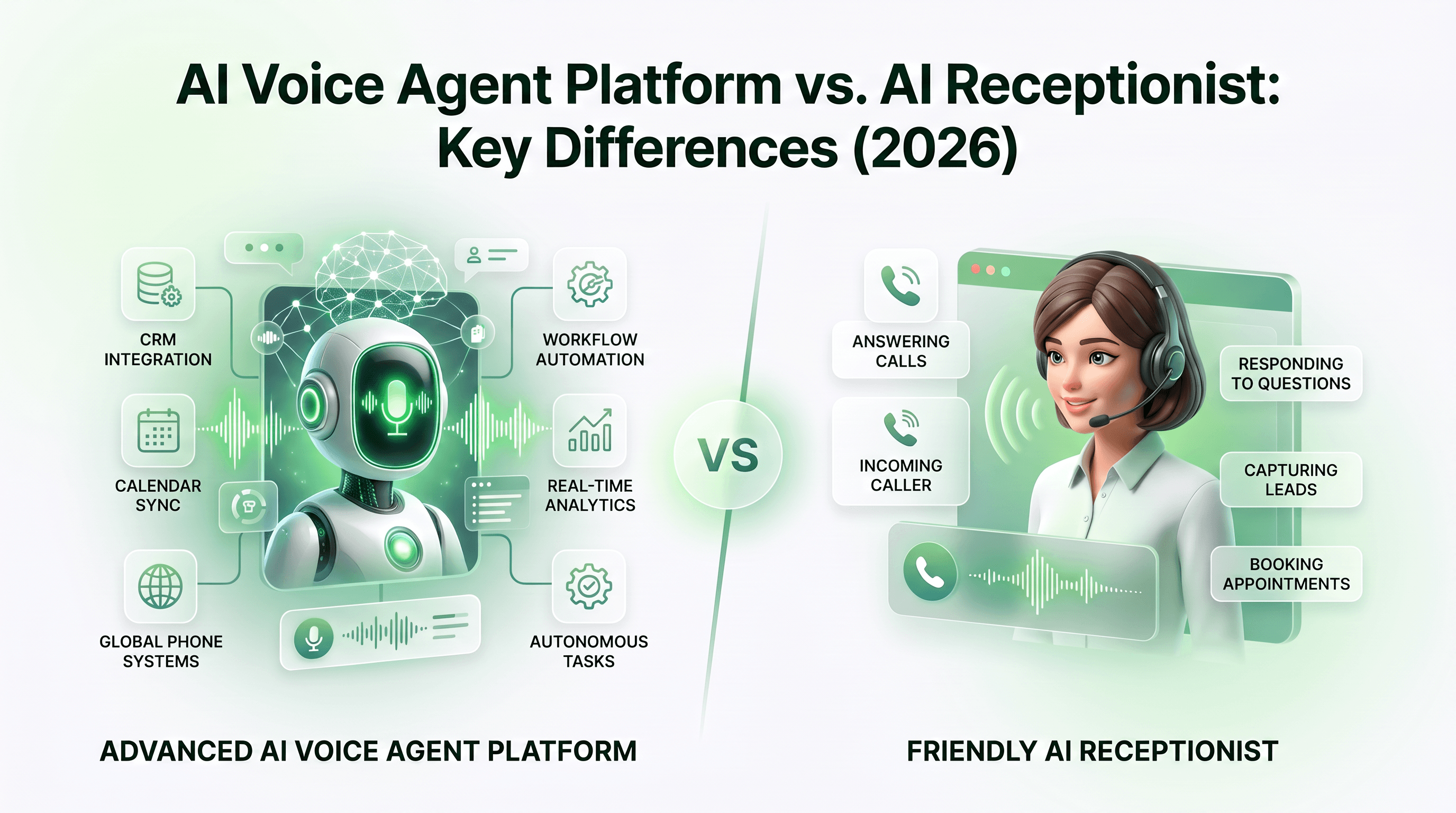
To understand where a receptionist-focused tool sits relative to more configurable platforms, this comparison of AI voice agent platforms and AI receptionists is a useful starting point. And if you're weighing whether more staff is the answer to difficult call volume, this post on why hiring another receptionist often doesn't solve the problem is worth a read.
Frequently Asked Questions
Ready to see RoboRingo in action?
Handle calls, SMS, and WhatsApp with AI agents that work 24/7 — set up in minutes, not months.
Explore RoboRingo →