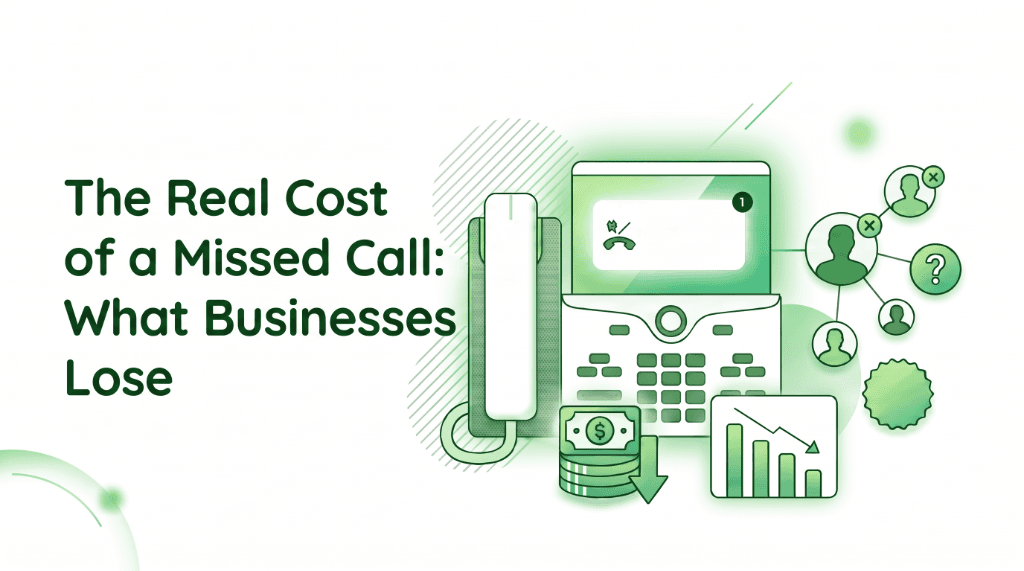
Most businesses don't track how many calls they miss, which is exactly why the number is so easy to underestimate. Industry research puts the average small business loss at roughly $126,000 a year from missed calls alone, and the businesses missing the most calls are often the ones who'd say their phones are "pretty well covered."
If you're past the "is this actually a problem" stage and ready to compare vendors, our enterprise buyer's checklist walks through exactly what to ask before you sign anything.
How much does a missed call actually cost?
The honest answer is: it depends heavily on your industry and average transaction value, but the pattern holds everywhere. A 2024 study by 411 Locals found that small businesses answer only about 38% of incoming calls live, meaning roughly six or seven out of every ten callers reach voicemail or nothing at all.
Per-call costs scale with what a booked customer is worth. Research aggregated across CallRail, Invoca, and BIA Advisory Services puts the cost of a single missed call at around $25 for low-ticket businesses, $300 to $1,200 for home services like HVAC and plumbing, $425 or more for legal intake, and into the thousands for high-value healthcare specialties like dental implants. Multiply that by a typical daily call volume and a realistic conversion rate, and most service businesses land somewhere between $25,000 and $150,000 a year in lost revenue, purely from calls that were never answered.
Figures referenced from 411 Locals (2024), CallRail (2025), Invoca, BIA Advisory Services, and Ambs Call Center (2025) industry research. Actual losses vary by call volume, industry, and average transaction value; use the formula below with your own numbers for a more accurate estimate.
Why calls get missed in the first place
- Front desk or support staff are already on another call when a new one comes in
- The call arrives after hours or on a weekend, when no one is scheduled to answer
- Multiple locations share one number, and routing logic breaks down under real call volume
- Staff are pulled away from the phone by in-person customers or urgent tasks
Why voicemail (and traditional IVR) make it worse, not better
Most businesses assume voicemail is a safety net. The data says otherwise: research from Invoca and Dialzara puts the share of callers who hang up without leaving a voicemail at 80 to 85%. Of the small minority who do leave a message, a large share expect a callback within 30 minutes, but many businesses take over 24 hours to return the call, by which point the caller has already found someone else.
Traditional IVR menus don't solve this so much as relocate the frustration. A caller who has to navigate "press 1 for sales, press 2 for support, press 3 to repeat this menu" before reaching a real person is often no more satisfied than one who hit voicemail. The difference between that and a conversational AI phone agent is worth spelling out directly, since it's one of the most common points of confusion for buyers evaluating call automation.
AI receptionist vs. IVR: what's actually different
| Traditional IVR | Conversational AI Phone Agent | |
|---|---|---|
| How it works | Fixed menu tree: "press 1 for sales, press 2 for support" | Understands natural spoken language and responds like a person would |
| Caller effort | Caller has to guess which option fits their need | Caller just says what they need in their own words |
| Handles the unexpected | Breaks down outside the pre-built menu paths | Can ask a clarifying question or hand off to a human |
| Caller experience | Widely disliked; often abandoned mid-menu | Feels closer to a live conversation |
| What it captures | Usually just a routing decision or voicemail | Structured information: intent, details, next steps |
What actually recovers those calls: an AI call answering service
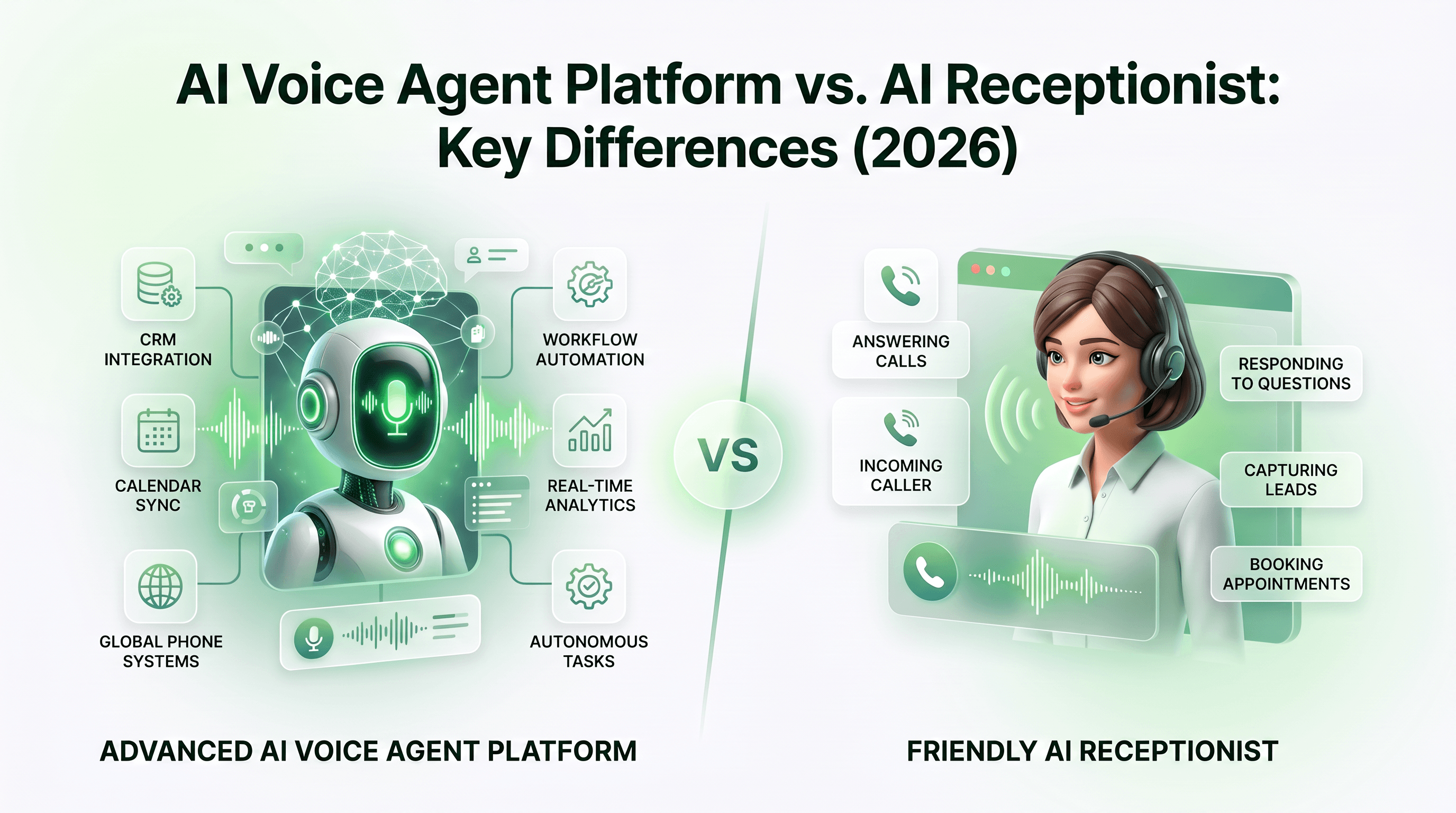
A conversational AI phone agent doesn't just route a call, it can actually hold a conversation: understanding what the caller needs, answering common questions on the spot, booking an appointment directly into a calendar, or capturing structured details and handing off to a human with full context. That's the functional difference between an AI call answering service and either voicemail or a legacy IVR: the caller gets an answer instead of a menu or a beep.
Where RoboRingo fits
RoboRingo is built specifically to close this gap: an AI call answering service that picks up every call, in plain conversation rather than a menu tree, 24 hours a day. It's the same infrastructure we've described in our other posts, LiveKit for real-time audio, Deepgram for speech recognition, and OpenAI for the reasoning layer, applied directly to the missed-call problem above. For most businesses, the calls it recovers in the first month cover the cost of running it.
Do the math for your own business
Industry averages are a useful starting point, but your real number will differ. A rough formula: missed calls per day × working days per year × your conversion rate × your average customer value = estimated annual loss. Even a conservative 20-30% conversion rate on recovered calls tends to make the case on its own.
The bottom line
The cost of a missed call isn't hypothetical, it's measurable, and for most businesses it's larger than they'd guess. Voicemail doesn't recover it, and a traditional IVR often just delays the same frustration. An AI call answering service is built specifically to close that gap.
If you want to see what your own missed-call number might look like, you can talk to our team here and we'll help you run the math against your real call volume. We also provide clear details on AI answering service pricing.
FAQs
Ready to see RoboRingo in action?
Handle calls, SMS, and WhatsApp with AI agents that work 24/7 — set up in minutes, not months.
Explore RoboRingo →