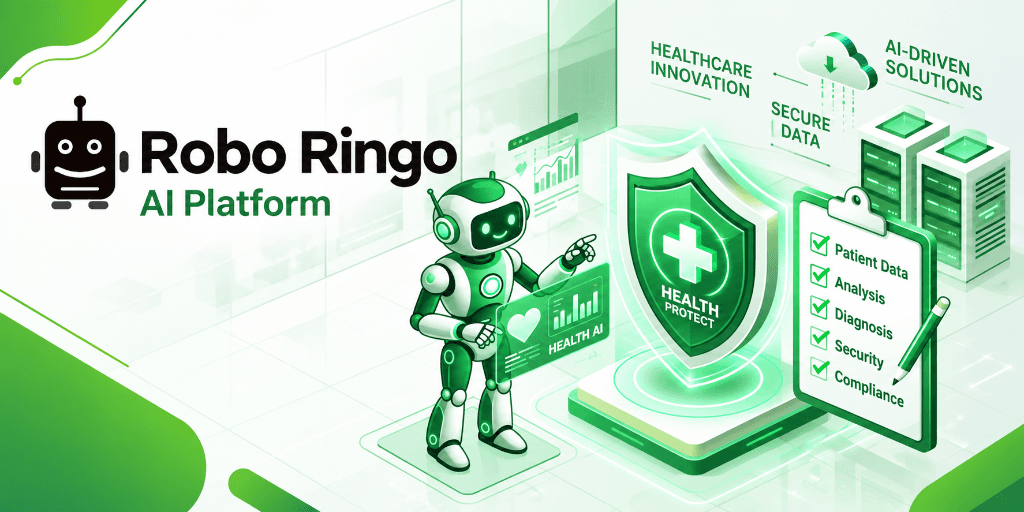
No AI receptionist is "HIPAA-certified," because that certification doesn't exist — there is no U.S. government body that certifies any product as HIPAA-compliant. What actually makes an AI receptionist usable for patient calls is a signed Business Associate Agreement (BAA) covering every part of its stack that touches protected health information (PHI), paired with the technical safeguards HIPAA's Security Rule requires. A vendor's marketing claim of being "HIPAA compliant" isn't proof of any of that — it's a sentence on a website until you've verified the BAA yourself.
This isn't legal advice, and HIPAA compliance always depends on your specific workflow and jurisdiction, so confirm anything here with your practice's counsel or compliance officer before relying on it. What follows is the checklist to walk through with any vendor before letting their AI touch a single patient call.
Key Takeaways
- "HIPAA-certified" is not a real status. No accreditation body certifies products under HIPAA. What's real is a signed BAA plus documented safeguards, and sometimes a third-party HIPAA audit.
- A signed BAA has to be in place before the first call that touches PHI, not after. Operating without one, knowingly, isn't treated as an innocent mistake if there's ever a violation.
- Appointment information itself counts as PHI. Regulators have pursued enforcement action over exactly this, so "we only handle scheduling, not medical details" isn't the safe harbor it sounds like.
- One BAA with the AI receptionist company often isn't enough. The telephony carrier, the voice synthesis provider, the underlying language model, and the data storage layer can all independently need coverage.
- "HIPAA-compliant" on a pricing page is a marketing claim, not evidence. Ask the vendor to name their auditor and show you the BAA terms directly.
What Does "HIPAA Compliant" Actually Mean for an AI Receptionist?
It means the vendor operates as your Business Associate under a signed BAA and has the administrative, technical, and physical safeguards HIPAA's Security and Privacy Rules require, such as encryption, access controls, audit logging, and breach notification procedures. It does not mean the vendor holds a government-issued HIPAA certification, because no such certification exists for any company or product.
This distinction trips up a lot of buyers. A badge that says "HIPAA Compliant" on a homepage is a self-description, not independent verification. What is independently verifiable is a HIPAA-focused third-party audit (sometimes referenced as a SOC 2 report scoped to include HIPAA-relevant controls, performed by a named auditing firm) and the actual signed BAA. If a vendor can't name who audited them or won't let you review BAA terms before you sign, treat the "HIPAA compliant" claim as unverified.
Does Your AI Receptionist Need a BAA?
Yes, if it handles anything that qualifies as protected health information, and the scope of what counts as PHI is broader than most practices assume. HIPAA defines a Business Associate as any vendor that creates, receives, maintains, or transmits PHI on behalf of a covered entity, and an AI receptionist answering patient calls does exactly that the moment a caller gives their name alongside a reason for calling.
Scheduling information alone counts. This isn't a gray area anymore: regulators pursued an enforcement settlement in early 2026 against a dental software vendor over a data breach affecting roughly 15 million individuals, specifically on the basis that appointment data is PHI. "We just handle scheduling, not medical details" is not a safe exemption from BAA requirements.
If your AI receptionist takes any inbound call where a patient states their name and why they're calling, treat it as PHI-handling by default and require a BAA before go-live.
What Should the BAA Actually Cover?
A signed BAA on file isn't automatically sufficient — the terms inside it determine what's actually protected. At minimum, verify the agreement explicitly addresses:
- Call recordings and transcripts, not just structured data fields — voice calls generate both, and both can contain PHI.
- Whether call data is used to train AI models, and if so, under what safeguards. This is a detail general-purpose AI tools frequently don't address at all.
- Breach notification timelines and responsibilities, so you know what happens and when if something goes wrong.
- Data retention and deletion policies, including how long recordings and transcripts are kept and how they're disposed of.
- Subcontractor coverage — if the vendor relies on other companies for parts of its stack, the BAA should address whether those subcontractors are also covered.
Why the Full Stack Needs to Be Covered, Not Just the Top-Level Vendor
This is the part most buyers miss entirely. An AI receptionist is rarely a single piece of software — it's typically a stack of several vendors working together: a telephony carrier handling the call itself, a speech-to-text provider transcribing it, a language model interpreting it, a text-to-speech provider generating the response, and a database storing the result. HIPAA obligations flow downhill through every one of those hops. A compliant deployment needs BAA coverage at each layer that touches PHI, not just an agreement with the company whose name is on the product.
This is exactly why a vendor's single, standalone "we're HIPAA compliant" statement deserves scrutiny. Ask directly: does the BAA cover only your AI receptionist agreement, or does it also address the underlying telephony and AI infrastructure the product is built on? If the vendor can't answer clearly, that's a gap worth resolving before signing, not after.
What Happens If You Skip the BAA?
The legal exposure is more direct than many practices expect. HIPAA violation penalties are tiered by culpability, and using an AI receptionist that has no BAA and no HIPAA program isn't treated as an innocent, unaware mistake once you've been told it isn't compliant — it falls into a higher-culpability tier with correspondingly steeper penalties per violation.
The scale compounds fast. A modest practice handling 150 patient calls a month through a non-compliant system isn't risking one violation if something goes wrong; depending on how an investigation is scoped, it can be treated as up to 150 individual instances. That math is a large part of why compliance posture should weigh more heavily in a vendor decision than price or feature count for any practice whose AI receptionist touches patient calls.
The Checklist to Run Before You Buy
Walk through this directly with any vendor, and don't accept "yes, we're HIPAA compliant" as a complete answer to any line item below:
- [ ] Will they sign a BAA before the first call goes live? Not "eventually," not "on enterprise plans only" — before.
- [ ] Does the BAA explicitly cover call recordings, transcripts, and AI training data use?
- [ ] Can they name their auditor, if they claim a third-party HIPAA audit or SOC 2 report covering HIPAA-relevant controls?
- [ ] Is the full stack covered — telephony, speech recognition, the language model, and data storage — not just the top-level product?
- [ ] What are the breach notification terms, and how quickly are you informed if something goes wrong?
- [ ] Where is PHI stored, and does that location meet your practice's data residency requirements?
- [ ] What happens to call data if you cancel? Deletion policies matter as much as collection policies.
- [ ] Does the AI escalate appropriately for clinical urgency, or only route by keyword? (A compliance-ready system still needs sound call-routing behavior underneath the paperwork.)
Where RoboRingo Stands Today
RoboRingo's publicly confirmed security posture includes SOC 2 compliance and ISO 27001 certification, built on carrier-grade infrastructure with real-time call transcription and configurable routing. What we have not been able to confirm from public materials is a standing HIPAA Business Associate Agreement program. That's not a claim that RoboRingo can't support healthcare use cases — compliance programs change, and this is exactly the kind of status that shifts over time across the industry, as it has for other vendors in this space.
If your practice's calls will touch PHI, ask directly and get it in writing before deployment, the same way you should with any vendor in this category, regardless of what their marketing materials say. That's not a RoboRingo-specific caveat; it's the entire point of this article.
Frequently Asked Questions
Ready to see RoboRingo in action?
Handle calls, SMS, and WhatsApp with AI agents that work 24/7 — set up in minutes, not months.
Explore RoboRingo →